
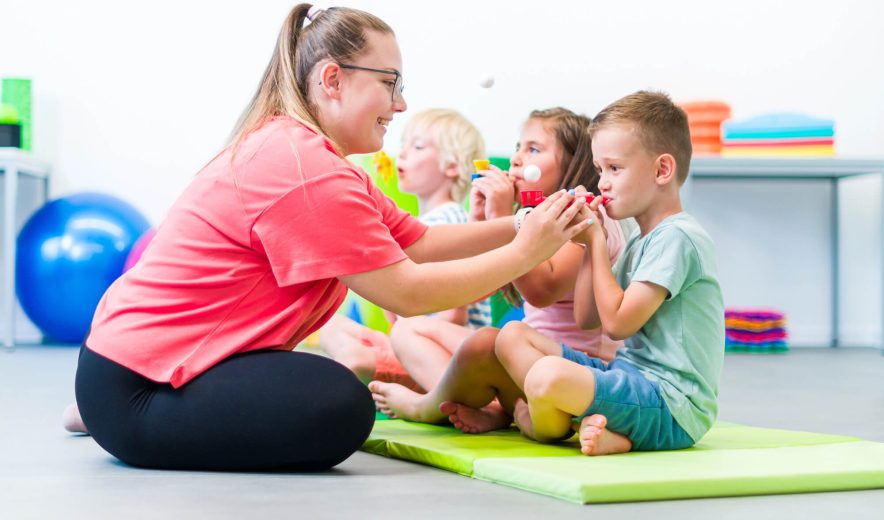
How Physiotherapy Supports Children With Autism
When people think about autism therapy, physiotherapy may not be the first profession that comes to mind.
Autism is commonly discussed in relation to communication, social interaction, behaviour, and sensory differences.
But movement can also be part of the picture.
Some autistic children experience difficulties with balance, coordination, posture, motor planning, strength, or learning new physical skills.
When those challenges affect participation, pediatric physiotherapy may help.
Autism Looks Different in Every Child
There is no single movement profile associated with autism.
One child may be highly active and coordinated.
Another may find playground equipment difficult.
Another might avoid sports because catching a ball, changing direction, or coordinating multiple movements feels frustrating.
The presence of autism itself does not automatically mean a child needs physiotherapy.
The question is whether physical or motor challenges are affecting the child’s everyday life.
Movement Difficulties Parents May Notice
Parents may seek physiotherapy when their child has difficulty with:
- Running
- Jumping
- Balance
- Throwing and catching
- Climbing
- Riding a bicycle
- Learning new physical movements
- Participating in sports
- Keeping up with peers
- Posture
- Strength or endurance
Some autistic children may also have motor delays or differences in coordination.
Physical therapists who work with autistic children can assess functional movement and help with skills involving coordination, posture, motor development, physical activity, and participation.
Therapy Should Begin With the Child
An autistic child should not be treated as a collection of deficits that need to be corrected.
A good starting point is finding out:
- What does the child enjoy?
- What do they want to participate in?
- What is difficult?
- What matters to the family?
- What environments are challenging?
- How does the child communicate best?
A child who loves playgrounds but cannot climb safely has a meaningful therapy goal.
A teenager who wants to participate in gym class but struggles with coordination has another.
Those goals are more useful than attempting to make every movement look typical.
What Can Pediatric Physiotherapy Work On?
Depending on assessment findings, physiotherapy may support:
Balance and Coordination
Activities may involve obstacle courses, stepping challenges, climbing, jumping, or ball skills.
Strength and Endurance
Improved strength and fitness can make physical activities easier and support participation.
Motor Planning
Some children need additional practice learning how to organize their body to perform unfamiliar movements.
Gross Motor Skills
Running, jumping, stair climbing, playground movement, or sport-specific skills may be addressed.
Physical Activity
A therapist can help families identify activities that match the child’s abilities and interests.
What About Sensory Differences?
Sensory processing can influence how a child responds to movement and different environments.
However, physiotherapy and occupational therapy have different areas of expertise.
If sensory challenges significantly affect everyday participation, an occupational therapist may also be involved.
Occupational therapy guidance emphasizes individualized assessment before sensory-based interventions are prescribed.
Collaboration Matters
Autistic children may work with several professionals.
Depending on their needs, this can include:
- Physiotherapists
- Occupational therapists
- Speech-language pathologists
- Physicians
- Educators
- Psychologists
- Other developmental professionals
The best care is coordinated around the child’s actual needs rather than assuming every autistic child needs the same set of services.
Focus on Participation
The most meaningful question may not be:
“Can my child perform this movement perfectly?”
It may be:
“Can my child participate in what they enjoy?”
Pediatric physiotherapy can help when physical challenges are creating barriers to play, recreation, school activities, mobility, or independence.
The goal is not to change who the child is.
It is to give them more opportunities to move through the world in ways that work for them.
Leave a Reply