
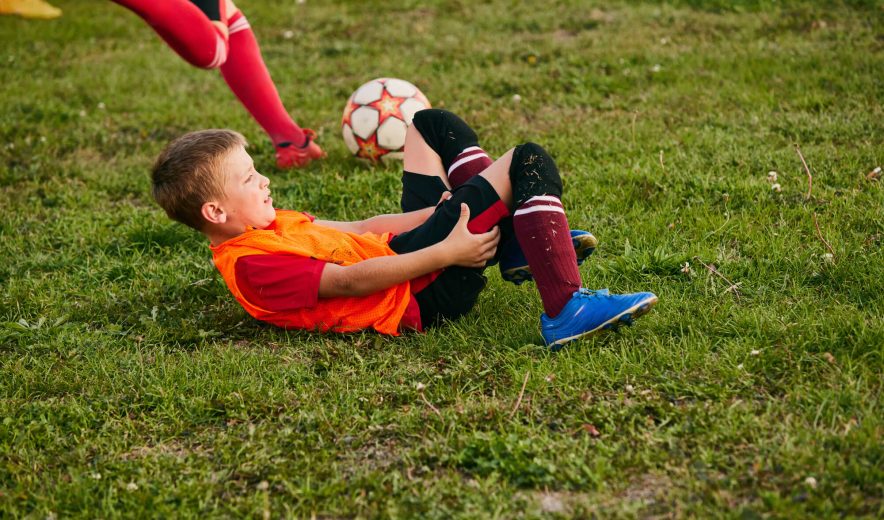
Sports Injuries in Kids: When Is It Safe to Return to Activity?
The first question many young athletes ask after an injury is not:
“What exactly did I injure?”
It’s:
“When can I play again?”
Parents often want the same answer.
Unfortunately, the safest return-to-sport decision usually cannot be made from the calendar alone.
Feeling Better Is Not the Same as Being Ready
Pain often improves before an injured area has fully regained its previous capacity.
A child may feel fine walking around the house but still lack the strength, balance, mobility, or tolerance needed for sprinting, jumping, cutting, landing, or contact.
Returning too soon can aggravate an injury or expose the athlete to another one.
The American Academy of Pediatrics recommends considering the diagnosis, effects on performance, risk of worsening the injury, risk of secondary injury, response to treatment, and whether participation can be modified when making return-to-play decisions.
Every Sport Places Different Demands on the Body
“Can my child exercise?” and “Can my child return to their sport?” are different questions.
A swimmer and a soccer player may have completely different requirements after the same type of injury.
Returning safely requires understanding what the athlete actually needs to do.
A soccer player may need to:
- Sprint
- Decelerate
- Cut
- Kick
- Tolerate contact
A basketball player may need:
- Repeated jumping
- Landing
- Side-to-side movement
- Acceleration
- Rapid direction changes
Rehabilitation should gradually prepare the child for those demands.
Signs an Athlete May Not Be Ready
A young athlete may need additional recovery if they:
- Still have pain during sport-related movement
- Are limping
- Avoid using the injured side
- Have obvious swelling
- Have limited joint movement
- Have not regained strength
- Cannot perform basic sport movements comfortably
- Compensate significantly during running or jumping
Fear can also matter.
An athlete who physically appears improved but does not trust the injured area may move differently when speed increases.
Return to Sport Is Usually Gradual
Going from “rest” directly into a full competitive game is rarely the ideal progression.
Depending on the injury, the athlete may move through stages such as:
- Normal everyday activity
- Basic exercise
- Strength and mobility work
- Running or sport-specific conditioning
- Non-contact practice
- Modified participation
- Full training
- Competition
The exact progression depends on the injury and medical guidance.
Children Are Not Small Adults
Growing bodies have unique considerations.
Growth plates and developing musculoskeletal systems can be affected by injuries and repetitive training demands.
The AAP notes that common youth sports injuries include sprains, strains, growth-related irritation and stress injuries, and advises further evaluation for point tenderness over a bone in a growing athlete.
Persistent pain should not simply be written off because the athlete is young.
What Can Pediatric Physiotherapy Do?
A physiotherapist may assess:
- Strength
- Joint movement
- Balance
- Running
- Jumping and landing
- Sport-specific movement
- Endurance
- Confidence using the injured area
Rehabilitation can then progress toward the actual demands of the sport.
Don’t Rush the Last 10%
Young athletes often become impatient once daily life feels normal.
But the final stage—regaining sport-specific capacity—is important.
The goal is not merely to get back quickly.
It is to return prepared.
If your child has sustained a sports injury, guidance from an appropriate healthcare professional can help determine when and how they should resume activity safely.
Leave a Reply