
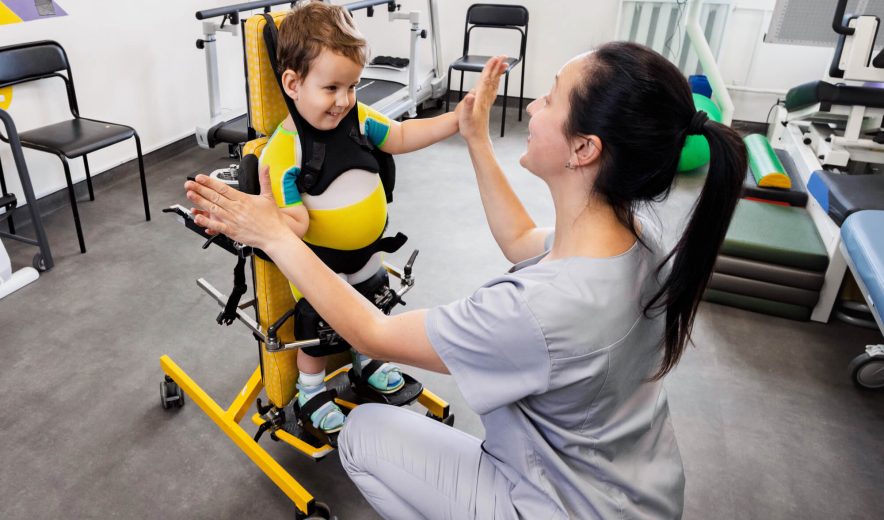
How Pediatric Physiotherapy Can Help Children With Cerebral Palsy
Cerebral palsy affects every child differently.
One child may walk independently but find balance difficult. Another may use a walker or wheelchair. Some children experience increased muscle stiffness, while others have challenges involving coordination or changing muscle tone.
That variability is why pediatric physiotherapy for cerebral palsy should never be built around a one-size-fits-all program.
Understanding Cerebral Palsy
Cerebral palsy, often shortened to CP, describes a group of conditions affecting movement and posture as a result of injury or differences involving the developing brain.
Depending on the child, CP can affect:
- Muscle tone
- Balance
- Coordination
- Strength
- Mobility
- Posture
- Walking
- Hand and arm use
- Participation in physical activity
Some children have additional health or developmental needs.
The diagnosis may be shared, but the functional goals can be completely different.
What Is the Goal of Physiotherapy?
Parents sometimes assume the goal is to make a child’s movement look as “normal” as possible.
Modern pediatric rehabilitation tends to take a broader view.
The important question is:
What does this child want and need to be able to do?
That could mean:
- Sitting more comfortably during school
- Moving independently around the home
- Using a walker more efficiently
- Getting onto the playground
- Improving transfers
- Participating in adapted sports
- Increasing endurance
- Developing strength
- Learning a new mobility skill
Physical therapists can support people with cerebral palsy with movement, strength, function, mobility, equipment and participation throughout different stages of life.
Physiotherapy Changes as the Child Grows
A baby’s needs are different from those of a school-aged child or teenager.
Early physiotherapy may focus on:
- Positioning
- Head and trunk control
- Reaching
- Rolling
- Sitting
- Supported standing
- Early mobility
Later goals may involve:
- Walking
- Transfers
- Strength
- Fitness
- Endurance
- Community mobility
- Equipment
- Sports or recreation
Therapy should evolve with the child.
Families Are Part of the Team
Children do not live inside therapy clinics.
Their real environment includes home, school, playgrounds, community spaces, friends, and family.
That is why pediatric physiotherapists frequently work collaboratively with parents and other professionals.
Instead of prescribing an enormous list of exercises, therapists can help families find realistic ways to incorporate movement into routines that already exist.
The best goal is often one that matters to the child.
Looking Beyond a Diagnosis
Canadian childhood disability research has increasingly emphasized looking beyond physical impairments alone.
CanChild’s well-known F-words framework focuses on six interconnected areas:
- Function
- Family
- Fitness
- Fun
- Friends
- Future
The framework encourages families and clinicians to think about the whole child rather than defining development entirely by diagnosis or physical limitations.
That perspective can change therapy.
Working on walking may not simply be about improving gait.
It might be about being able to play outside with siblings.
Improving wheelchair mobility may be about keeping up with friends at school.
Building endurance may help a teenager participate in a recreational activity they enjoy.
Function becomes meaningful when it connects with real life.
What Does an Assessment Involve?
A pediatric physiotherapist may evaluate:
- Muscle tone
- Strength
- Joint mobility
- Flexibility
- Balance
- Posture
- Motor skills
- Walking or mobility
- Transfers
- Participation
The therapist may also discuss equipment needs, school activities, family priorities, and future goals.
Children with CP often receive care from multiple professionals, so physiotherapists may collaborate with physicians, occupational therapists, speech-language pathologists, orthotists, teachers, and other members of the care team.
Progress Does Not Look the Same for Every Child
Progress might mean learning an entirely new skill.
It might mean maintaining mobility.
It might mean completing an activity with less help.
It might mean becoming stronger or more comfortable.
Or it might simply mean participating more fully in something the child loves.
Pediatric physiotherapy for cerebral palsy should focus on helping each child function at their best within their own life—not comparing their abilities with someone else’s.
Leave a Reply